United Farm Workers
CALIFORNIA, 1960s
Farmworkers stood in hot fields picking grapes for hours without getting a break. It was exhausting and boring and hurt their backs. There were no bathroom facilities. They were paid very little—about a dollar an hour. Although grateful to have work, they felt disrespected.
From the early 1940s to the mid-1960s, millions of Mexicans arrived in the United States. Many people came through the Bracero Program, which primarily brought people as hired hands from Mexico to harvest crops on a seasonal basis. In California, immigrant farmworkers support the state’s multimillion-dollar agricultural industry. Owners of large farms undervalued and disrespected many Latino/a/e workers.
In the early 1960s, in the small town of Delano, California, the workers on large grape farms were fed up. They led a massive strike and grape boycott against local grape growers, demanding higher pay and better working conditions. Their ideas caught on. In 1966, members of the Agricultural Workers Organizing Committee, which included Filipino, African American, Arab American, and Mexican American workers, joined forces with the predominantly Latino National Farm Workers Association to form the United Farm Workers (UFW) union. The UFW became a strong advocate for farmworkers. Together they pushed for contracts with powerful California growers—a nearly impossible feat—by staging a nationwide grape boycott.
The Struggle to Organize
By the mid-1950s, many working people, especially in heavy industries such as steel mills and manufacturing, had organized into unions. Farmworkers were an exception. The seemingly endless supply of labor, seasonal work, and constant relocation made it difficult to successfully organize. When the UFW union formed, they had to overcome this pattern and fight powerful growers with far-reaching influence.
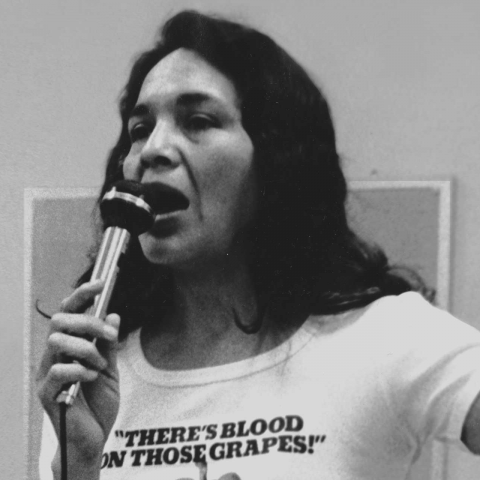
UFW leaders, such as Dolores Huerta, connected farmworkers’ rights to civil and human rights. Like some other civil rights activists in the 1960s, they stressed nonviolence in achieving their goals. This appealed to supporters. The first grape boycott led to others, including boycotts of strawberries and lettuce. During each boycott, the UFW continued to raise awareness about the working conditions of farmworkers, stressing the dignity of the work and the worker.
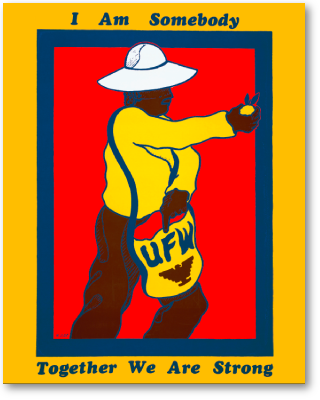
The UFW Encouraged and Inspired Members
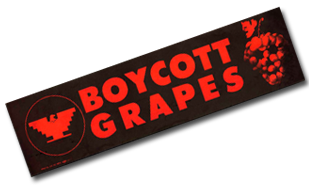
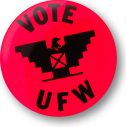
UFW leaders encouraged workers to stick together to preserve a single union (“una sola union” in Spanish). They stressed the importance of the farmworkers’ voices, individually and collectively. A distinctive flag appeared on all UFW materials. The Aztec eagle stood for the dignity of the farmworkers, and the black color symbolized their dark situation . The color red stood for the hard work and sacrifice of union members and the color white for hope and aspiration.
Millions Helped to Create Change
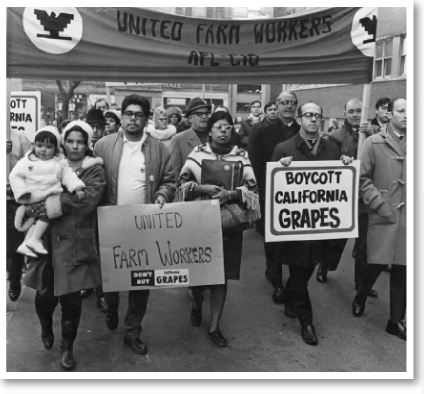
UFW leaders turned to US consumers for help, asking them to boycott grapes in support of their fight for higher pay and safer working conditions. At the height of the boycott, as many as 17 million people participated. Boycotters stopped buying grapes and related products at grocery stores, picketed stores that sold nonunion grapes, and spread the word about the cause. With the help of consumers, civil rights groups, and labor organizations, the UFW won contracts with most California grape growers by the summer of 1970. The UFW continues today, pushing for changes to improve working conditions for farm workers.