Pullman Porters and Maids
CHICAGO, 1920s
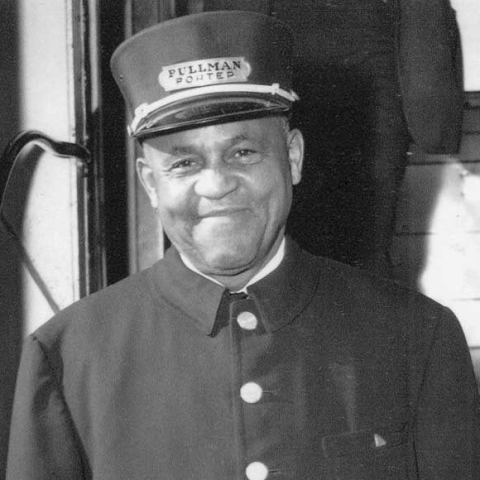
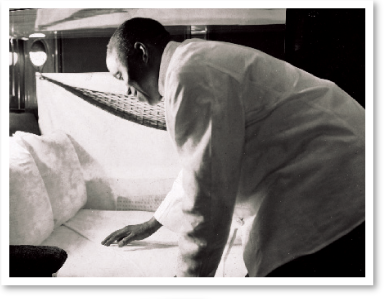
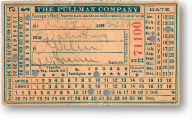
Pullman porters and maids spent their days on moving trains, working nonstop for 14 hours. They carried suitcases, ran errands, made beds, shined shoes, and politely greeted countless passengers, even the rude ones. If they were lucky, they got four hours of sleep at night.
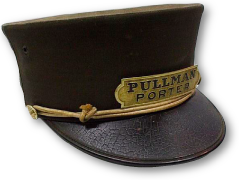
In the 1920s, job opportunities for African Americans were limited. At a time when most worked as sharecroppers or housekeepers, the jobs of a Pullman porter or maid were highly respected in the Black community. However, their friendly smiles and neatly pressed uniforms masked the hardships of the job. Porters and maids clocked hundreds of hours a month, earned low wages, and could be fired for speaking up about the racism and sexism they experienced.
Pullman Porters and Maids
In 1867, Chicago businessman George Pullman formed the Pullman Palace Car Company. This took place two years after the Thirteenth Amendment to the US Constitution ended slavery outside of prisons. His company built luxury train cars to appeal primarily to white passengers. Pullman hired formerly enslaved African Americans as the trains’ waitstaff, or porters and maids. The company encouraged passengers to treat them as servants to maintain a racist system.
By the 1920s, the company employed 12,000 porters and 200 maids. Whatever passengers wanted or needed, they provided. Porters and maids relied on tips for a significant part of their incomes and traveled thousands of miles while always on duty, Despite harsh treatment, Pullman porters and maids took great pride in their work. Their customer service routine—including making beds, shining shoes, providing manicures, and caring for children—was demanding and left little time for rest. These difficult working conditions united them to form a labor union, which became the Brotherhood of Sleeping Car Porters. This union brought workers together to protect their rights on the job.
The Fight to Organize
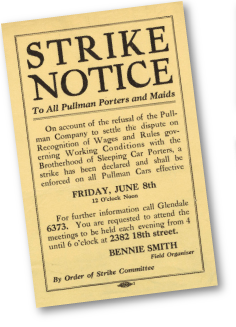
In 1925, A. Philip Randolph led the Pullman porters in forming the Brotherhood of Sleeping Car Porters—the first modern, successful African American labor union. The BSCP stood strong in Chicago because of the large union membership and the large number of passenger trains that came through the city. They wanted better wages and safer working conditions. They also aimed to stop the discrimination they faced. However, they met strong resistance from the Pullman Company and doubt from some other workers. Most porters, aware they could be fired for joining the BSCP, stayed away.
BSCP leaders held meetings at South Side churches and clubs to convince community members that the union would fight for workers’ interests. A. Philip Randolph was the first president of the BSCP. Porters and maids asked him to help them organize their labor union because of his strong views on organizing in Black communities.
Success for the BSCP
For many years, the BSCP’s leader, A. Philip Randolph, fought the racism of the American Federation of Labor’s (AFL) leadership. He hoped to gain AFL recognition because this large partnership of unions would bring support to the BSCP. Finally, in 1935, the BSCP became the first African American union to receive an AFL charter. But in some ways, the union’s work had just begun. The first contract between the BSCP and the Pullman Company took two years to negotiate. It redefined work and rest hours and included a raise.
A Lasting Legacy
The BSCP never had more than 15,000 members. Compared to other unions, that was considered small. The BSCP’s successful battle against the Pullman Company was important for porters, maids, and the larger African American community. Union leaders challenged racist stereotypes about African Americans being too uneducated to organize formal and effective labor unions. Union president A. Philip Randolph recognized the power of organizing and used his position to push for greater economic opportunities for other Black workers. Their activism helped to lay the foundation for the Civil Rights Movement of the 1950s and 1960s.