Abolition
CHICAGO, 1880s
In the 1850s, millions of African Americans were enslaved across the United States. African Americans who were born free faced racism and laws denying their civil rights.
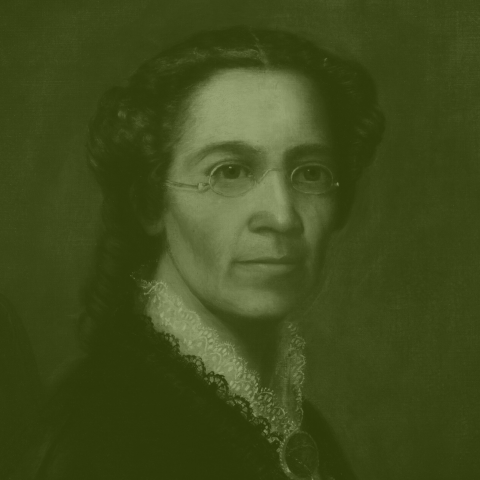
Abolitionists, or people who opposed slavery, fought for freedom for Black Americans by activating networks of community support. John and Mary Richardson Jones were among those abolitionists. They were both born free, or outside the system of slavery. They moved to Chicago in 1845, establishing what would become a large tailor shop and a real estate business.
Fight Against the Black Codes
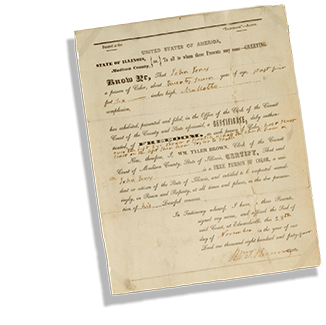
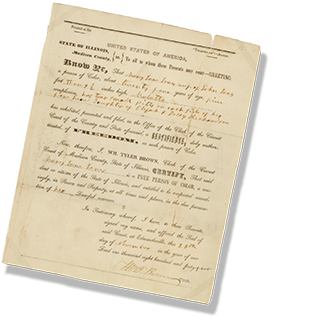
In Illinois, racist laws called the “Black Codes/Laws” denied John and Mary Richardson Jones (and many other free African Americans) their rights. Both had to prove their “free” status and pay $1000 bond to receive their “Certificates of Freedom.”
John Jones and many others wrote, spoke out, and advocated for the removal of these laws. Jones wrote “The Black Laws of Illinois and a Few Reasons Why they Should be Repealed.” The Illinois Constitution said, “all men are born freed and independent and have a right to enjoy liberty and pursue their own happiness.” Jones argued the Black Codes put conditions on African Americans that were not put on other citizens of Illinois. Thankfully, these laws were repealed in 1865.
Not Alone
John and Mary Richardson Jones were not alone. The Joneses worked with abolitionists throughout the United States. They both actively supported the Underground Railroad assisting freedom seekers fleeing their enslavers. Frederick Douglass knew the Joneses well and was at their home in Chicago often. Douglass even gave them special silver spoons as a wedding present!
John Brown was also a visitor to their home. Mary did not agree with Brown’s more violent tactics towards the ending of slavery. She even warned that he would “lose [his] life” because of his actions. On October 16, 1859, Brown, with about 22 others, captured the federal arsenal, or armory, at Harpers Ferry, Virginia. They hoped to arm enslaved people, encouraging them to revolt against their enslavers. His mission failed. Brown was taken prisoner, tried, and executed by the federal government.
Organizing in Chicago
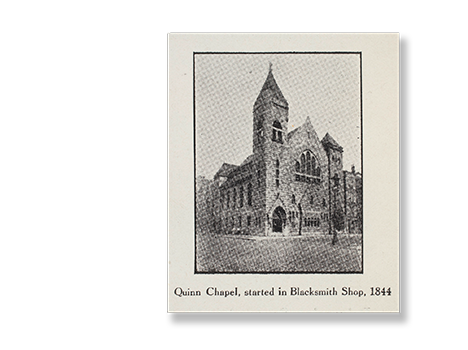
The Joneses worked hard to help African American Chicagoans too. John Jones cofounded Chicago’s Liberty Association to protect freedom seekers and free people. Mary Jones founded the Colored Ladies’ Freedmen’s Aid Society to support formerly enslaved people. They both helped to found Quinn Chapel AME Church and Olivet Baptist Church. Both churches helped welcome new African American residents to Chicago. Mary Richardson Jones also supported Chicago’s Provident Hospital that provided care for African Americans. She also donated money to the Phyllis Wheatley Home. The Home gave educational support to African American women.
The Joneses and countless others worked hard to gain civil rights and provide opportunities for African Americans in Chicago and beyond. The struggle was real, but they persevered.