Japanese Incarceration
WEST COAST, 1940s
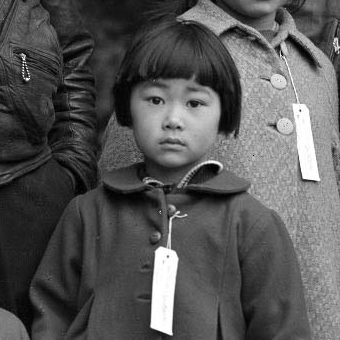
The United States government took Japanese Americans from their homes, forcing them to live together in tiny rooms made of tar paper and plywood. Barbed wire and gun towers surround them, the guards’ guns pointing in. Even children were suspected of being spies.
On December 7, 1941, the Japanese military attacked the United States naval base at Pearl Harbor, Hawaii. Within days, people of Japanese ancestry became the target of hysteria, increased racism, and suspicion. Government officials decided that all people of Japanese descent presented a security threat. During World War II, they forced more than 120,000 Japanese Americans and immigrants—two-thirds of whom were US citizens—living in the western United States and incarcerated them in “camps.” Executive Order 9066, signed by President Franklin D. Roosevelt in 1942, authorized this mass incarceration.
Numbered, Isolated, Questioned, and Trapped
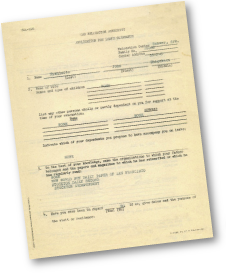
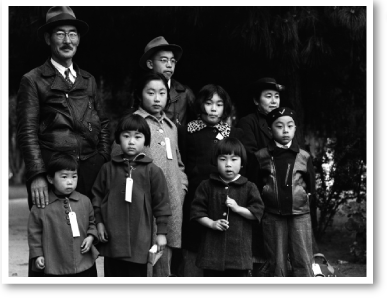
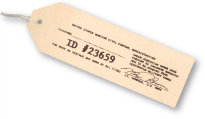
Names became numbers as incarcerated people lost their freedom. All incarcerated families received a number and used it to mark their possessions. Government officials established ten incarceration sites in remote places, surrounded by barbed wire and armed guards. They wanted to isolate the incarcerated people, whom they viewed as possible spies. While at the camps, incarcerated people were forced to take a questionnaire to test their loyalty to the United States.
Making a Life in the Internment Camps
Incarcerated people often gathered odds and ends to improve their tiny living spaces. They transformed rocks, scrap wood, and pieces of fabric into items to provide some comfort and sense of home. To pass the time, many took up crafts, such as carving, sewing, painting, and jewelry making.
Families in the camps also socialized with one another. Many adult Japanese immigrants played Hanafuda, a game meaning “flower cards.” Students attended school in flimsy, quickly constructed buildings and tried to recreate activities enjoyed by other American students, such as holding dances, playing sports, and publishing yearbooks. Despite these injustices, many incarcerated people maintained strong communities and even served in the US military.
Acknowledging Injustice
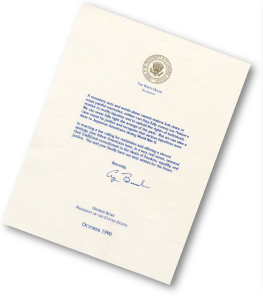
After decades of work by Japanese Americans, in 1988 the United States government formally apologized, acknowledging the incarceration and complete denial of civil rights as an injustice rooted in prejudice. Former incarcerated people typically received a letter from President George H. W. Bush and some monetary compensation.