Wounded Knee II
SOUTH DAKOTA, 1973
Their land was taken away, their culture disrespected, and their past was erased. In 1973, a group of Oglala Lakotas on the Pine Ridge Indian Reservation spoke out against this ongoing repression.
The Oglala Lakota took up arms and occupied, or took control of, Wounded Knee, a village on their reservation near the site of an 1890 massacre, referred to by the same name. They hoped to win back lost reservation land, reform tribal government, and establish fair and equitable government policies toward Indigenous people nationwide. This action became known as Wounded Knee II.
For 71 days, roughly 200 people inside Wounded Knee fought federal and state law enforcement and the tribal government. Two Native Americans died. One federal officer was paralyzed. Although the occupation did not achieve lasting results, it inspired other Indigenous tribes to speak out against centuries old systems of oppression and continuous interference by the US government.

Perspectives Inside Wounded Knee
The American Indians occupying Wounded Knee had a variety of viewpoints about their actions. Some Oglala Lakota Elders supported the occupation. Older leaders or chiefs, like Frank Fools Crow, spoke up for what they believed was right. They thought that the elected tribal chairman Dick Wilson did not respect traditional Lakota culture and asked for help from the American Indian Movement (AIM), a grassroots activist movement founded in the late 1960s, fighting him.
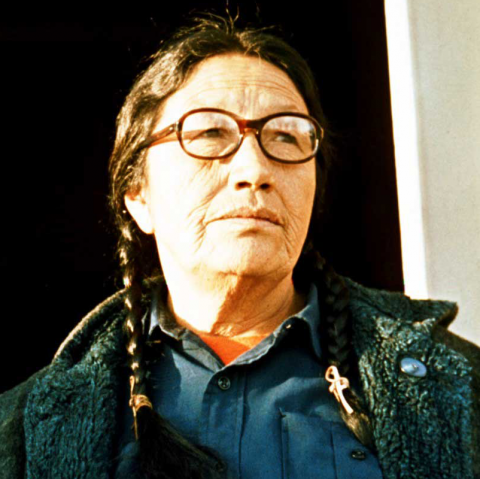
Younger Oglala Lakota activists pushed the occupation forward. These activists, including Ellen Moves Camp, formed the Oglala Sioux Civil Rights Organization (OSCRO). They moved to impeach, or remove from office, tribal chairman Dick Wilson. They believed he did not listen to his people, intimidated residents who didn’t agree with him, and misused reservation land. OSCRO supported AIM and invited the group to Wounded Knee.
Perspectives Outside Wounded Knee
The people fighting the occupiers of Wounded Knee also had different points of view about what was happening. The Pine Ridge tribal government strongly opposed the occupation. Tribal chairman Dick Wilson fought back with words and weapons. He claimed the occupiers were outsiders who knew nothing about his reservation. Wilson organized roadblocks, and his supporters exchanged gunfire with those inside Wounded Knee.
The United States government was also against the occupation. The US government and American Indians have always had a relationship filled with conflict. The government wasn’t interested in restoring tribal lands from broken treaties and wanted to end the occupation. They sent federal forces to Wounded Knee, including US Marshals, the Federal Bureau of Investigation (FBI), and the Bureau of Indian Affairs police.
Speaking Out
During the 1960s and 1970s, AIM used several strategies to defend and protect the Native American community. This included nonviolent tactics, such as protests, spiritual walks, and occupations, and more controversial militant tactics such as the armed takeover of Pine Ridge Reservation. After being repeatedly ignored by the US government, some AIM members believed force or violence might be necessary to achieve freedom. Some in Pine Ridge supported AIM. Others believed its leaders did not care about Wounded Knee and only wanted to become famous.
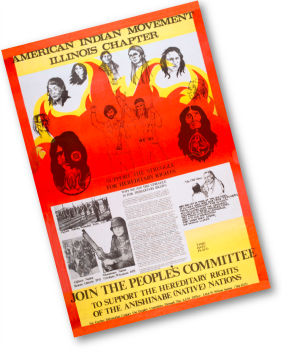
Negotiations between the Oglala Lakota leaders and the federal government about new treaty rights had no lasting results. Activists, however, continued to speak out. Several months after the occupation ended, Oglala Lakota and Wounded Knee leader Ellen Moves Camp spoke in Chicago. The Illinois chapter of AIM continued to protest for Native Americans’ rights. In 1973, some members of different tribal nations who lived in the Chicago area created the Chicago Wounded Knee Conference Committee, which publicly protested US government policy toward Native Americans.